10 Lessons from 10 Years of Brand by Me
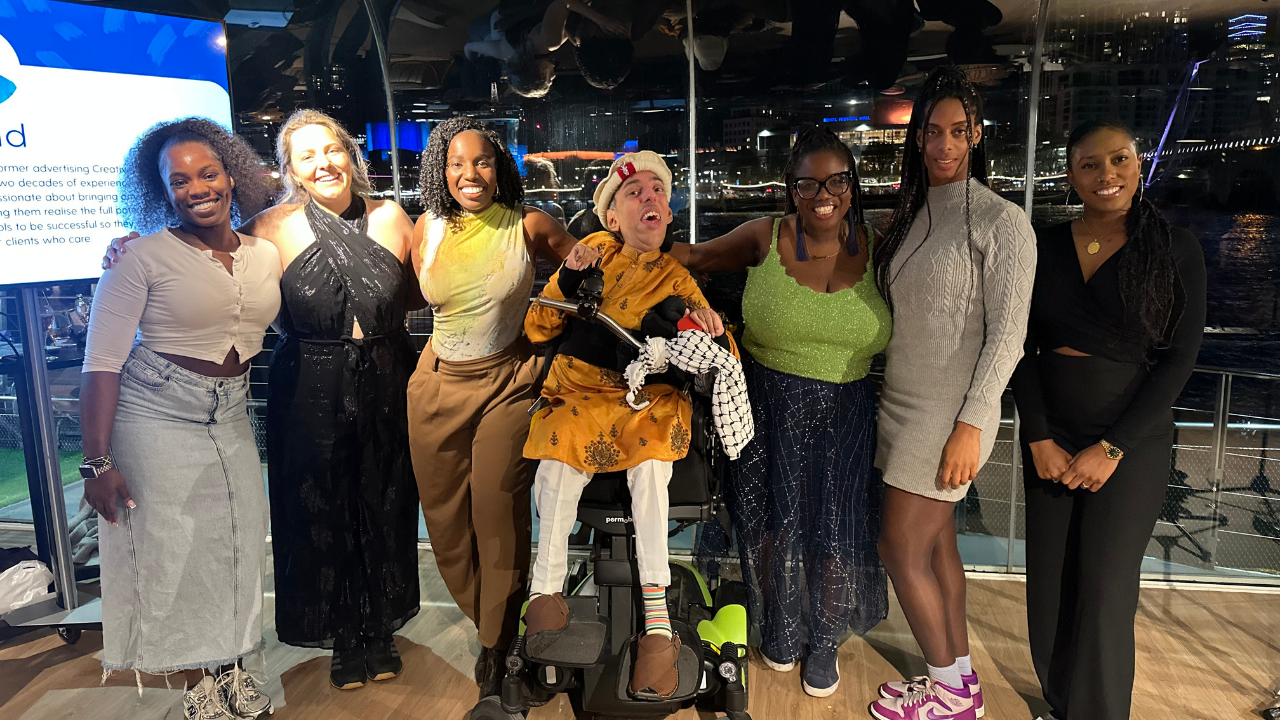

March marked 10 years of Brand by Me.
Ten years of building brands that do more than look good on a slide deck.
Ten years of helping organisations get clearer, braver and more accountable about what they stand for.
Ten years of proving that brand is not a cosmetic exercise. It is a change process.
To celebrate, I ran the first of our DISMANTLE masterclasses a space to share what we’ve learned and what it actually takes to do this work in practice.
Here are our 10 learnings from the last ten years of Brand by Me:
1. Your brand is NOT what people say when you’re not in the room.
Or at least, it’s not just that.
In a world where we are all permanently “in the room” — through social media, through content, through the sheer number of ways people can reach and respond to us — brand is as much about experience as it is about perception.
It’s not simply what people say when you’re not there. It’s what they experience when you are.
Which means your brand has to be able to do three things, clearly and consistently: express who you are, articulate what you stand for, and shape how you show up. If it can’t do that, it isn’t going to help you do what you need it to do.
2. Good strategy is always simple
I have always found it slightly baffling that strategy is so often made deliberately complex.
As if the role of strategy is to sound impressive rather than to be useful.
Good strategy should help people move in one coherent direction. It should give clarity. It should make decisions easier, not harder.
We start with the simplest possible framework: who, why, how, what, where, when. Not because the work is simple, but because if people can’t understand the strategy, they won’t use it. And if they don’t use it, it won’t change anything.
3. Brands are owned by everyone
This has been a core belief from the very beginning.
If brand sits with a small group of people — guarded, controlled, protected — it won’t embed. It won’t live in the organisation. It won’t become part of the culture.
Brand only works when people feel part of it. When they can see themselves in it. When they understand their role in bringing it to life.
If people become part of your brand, it becomes real.
4. From audience-driven to community-led
The language of “target audience” positions people as passive recipients — as if they exist simply to receive what we choose to give them.
But people are not passive. And they are certainly not without agency.
If we are serious about building brands that create meaningful change, we have to move beyond audience thinking and towards communities. Towards relationships. Towards shared ownership.
That means listening properly, sharing power and being willing to change based on what you hear.
5. Feel the fear and do it anyway.
Fear doesn’t usually introduce itself directly.
It shows up as hesitation. As delay. As overthinking. As a reluctance to make decisions. As the instinct to step back rather than forward.
Fear of getting it wrong. Fear of being called out. Fear of saying the wrong thing. Fear of change.
And yet, brand work — particularly when it involves equity and anti-racism — will surface all of that.
So part of the work, often an unexpected part, is helping people build the confidence and courage to move anyway. Not perfectly, but intentionally.
6. Less management, more leadership
You can’t process your way to change. This work requires far less management and far more leadership.
You can train people in process. You can give them frameworks. You can build structures.
But embedding equity and anti-racism requires people to step forward, not back.
To speak up. To make decisions. To make the difficult call when no-one else wants to.
That’s leadership.
And it’s not about job title. It’s about what you choose to do when it matters.
7. Accessibility is a necessity, not nice-to-have
This has been one of the most important and ongoing shifts in how we work.
Accessibility isn’t something you add at the end. It isn’t a “nice to have”. It isn’t an overlay.
It has to be built into the design, the language, the experience, the process.
Because if it isn’t, then what you are building is, by default, excluding people.
And when you centre accessibility properly, the work doesn’t just become more inclusive.
It becomes stronger.
8. “Not racist” is not enough
There is no neutral ground here.
If you’re not actively working against racism, you will reproduce it by default.
That means being explicit, intentional and accountable so that your brand moves beyond statements into action.
9. Culture eats strategy for breakfast
No matter how good your brand strategy is, if your culture doesn’t support what your brand is saying, people will feel the disconnect immediately.
Brand lives in behaviour. In decisions. In what gets prioritised. In what gets ignored.
If you want a truly strong brand, you need to build a culture that embodies it.
10. Do the work even when no one is watching
This is the thread that runs through everything.
Do the work when it’s visible. Do the work when it isn’t. Do the work when people are asking for it. Do the work when they’re not.
We have seen what happens when organisations engage with this work because they feel they should - and what happens when they stay with it because they believe in it.
That difference is everything. Because authenticity only happens when you’re consistent.
So what’s next?
Are you reading this and thinking, ‘Yes, but how do we actually do this in practice?’
That’s exactly why we created DISMANTLE.
DISMANTLE is a series of practical masterclasses designed to help you build equitable, anti-racist organisations and brands — not as a one-off project, but as ongoing work.
We cover:
- how to keep going when the work gets tough
- how to navigate risk and responsibility
- how to move beyond one-off initiatives
- how to build accountability into what you’re doing
Find out more and book the series of masterclasses here:
DISMANTLE masterclasses
Here's to the next 10 years!

Related Articles
Check out our latest insights on brands, social justice and all things Brand By Me